
Scientific studies prove
you only need 20 minutes a week
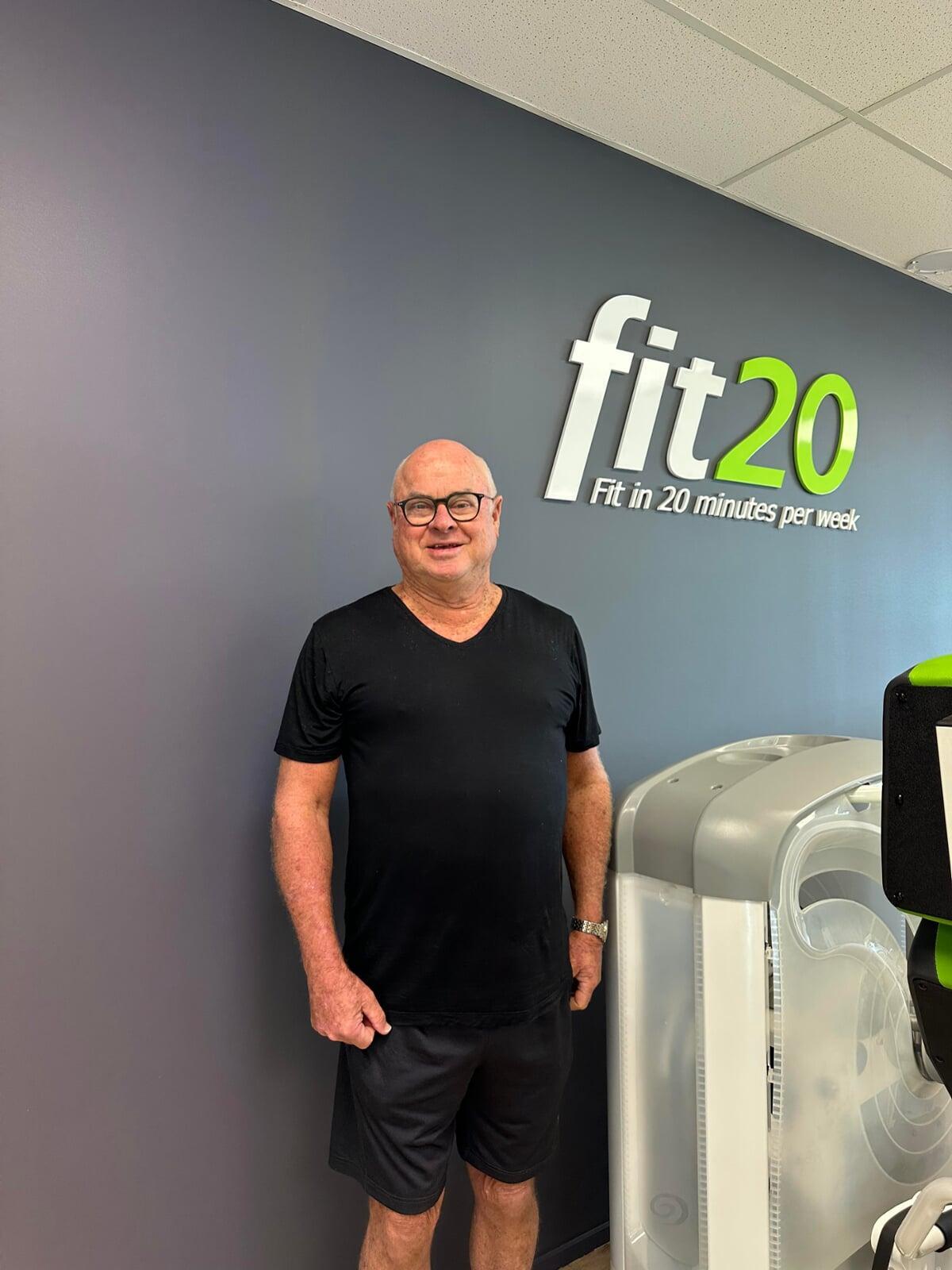
Most people struggle to find the willpower to go to the gym - the effort of getting there, changing clothes, and making time often feels harder than the workout itself. It's a feeling Rob Donaldson knows well.
At the end of a 20-minute session my whole body is shaking-I know I've had a proper workout
Rob signed up for fit20 because he had done some research, but he was still a sceptic, but three months in he was fully convinced of the results.
What he discovered was a fitness model backed by science: slow, controlled, high-intensity strength training designed to work muscles to momentary failure This, according to research, stimulates muscle growth, improves metabolism, and enhances overall strength and fitness - with no need for hours in the gym.
fit20's approach is based on evidence from studies showing that short but intense resistance training is enough to drive muscle gains.
One long-term study tracked nearly 15,000 participants over seven years and found that just one 20-minute high-intensity session per week could increase chest-press strength by 50% and leg-press strength by 70%. Other research on the 'Super Slow' training method, a technique used by fit20, indicates it produces superior strength results compared to traditional weight training in as little as 10 weeks.
A different way to train
For Rob, the shift in mindset was one of the biggest challenges. 'I was used to the idea that fitness meant sweating it out for a solid hour, needing a shower and a change of clothes afterward,' he says. 'But with fit20, you train in your normal business attire, no need for a post-workout shower, and you're done in 20 minutes.'
Now, 18 months later, Rob has the data to back up his experience. The fit20 App logs his progress, tracking weekly improvements in muscle tone, flexibility, and strength. 'You see the graphs, and it's clear - steady progress every week,' he says. 'It's not about becoming a bodybuilder, but keeping your muscles working so you can keep doing what you love as you get older.'
Staying strong with age
One of the benefits of fit20 is that it gives Rob the strength, energy, and health to do the things he enjoys - like regular swims in the sea and bike riding. Rob joined fit20 when he was 75, and now understands firsthand the importance of maintaining muscle strength. 'Most people my age sit on a bike at the gym, peddling slowly, just passing time. I didn't want that. I wanted something that would challenge me, that would keep me strong. fit20 does that.' Sessions take place in a private, climate-controlled studio, always with a personal trainer who ensures correct form and safety. 'The trainers push you but in a way that's smart,' Rob says. 'They know their stuff. At the end of a 20-minute session, my whole body is shaking - I know I've had a proper workout.'
Rethinking fitness
Despite its effectiveness, Rob is frustrated that more people don't know about fit20. 'There is research out there that proves it works, but we're still stuck with the old ideas about fitness,' he says. 'People think they need hours of gym time when, really, they just need 20 minutes a week.'
For those looking for a proven, research-backed alternative to traditional fitness routines, fit20 might be the answer. It's efficient, effective, and completely reshapes what we think exercise should be. Just ask Rob!
March 19 2025